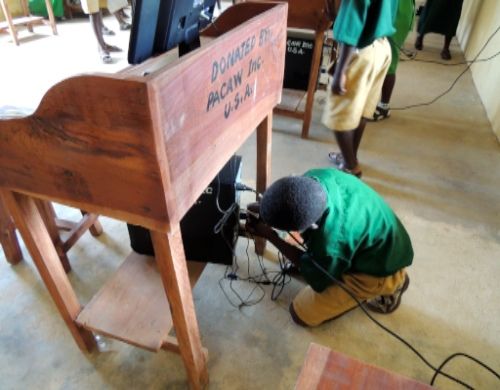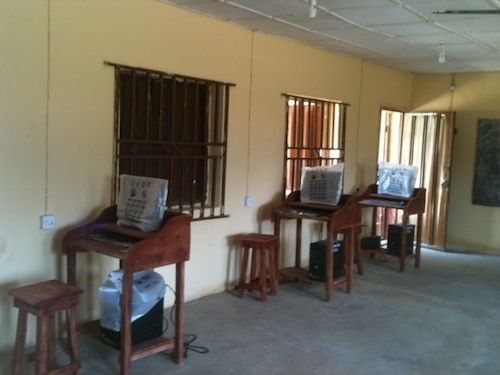
SPONSORS: Pan Africa Children Advocacy Watch (PACAW, Inc.) based in Maryland, USA and Olise - Omolu Foundation (OOF) based in Lagos.
PURPOSE: To contribute our “widow's mite” to the development of a new generation of selfless and committed future leaders who will lift Nigeria from it’s self inflicted abysmal state of affairs and redirect its course so that it can attain its true potential. For Nigeria to achieve her God-given potential, the next generation of leaders must have a completely different mindset. A mindset of NATION FIRST. It is in that vein that we are starting the yearly Senior High School “Essay” Competition.
STUDY MATERIAL FOR THE “ESSAY” COMPETITION
This study material is a short biography of a person who has demonstrated in his life, genuine love for Africa and even laid down his life for Africans. For this inaugural competition, we have gladly chosen the life of the Scottish Physician, Missionary, Explorer and slave abolitionist, Dr David Livingstone. The biography will be about four pages. We believe his type of selfless spirit and leadership mindset of service and sacrifice for Africans is the best example for future leaders of Nigeria and other African nations to study and emulate.
WHAT THE STUDENTS SHOULD DO
The students are required to answer three questions based on the biography.
We expect each student to read the biography intensely several times. Then, the student should answer the questions honestly by himself or herself “from the “heart”.
Please submit your answers (essays) to your Principal latest by Friday, November 29, 2024.
A team of judges put together by PACAW, Inc. and OOF will grade the essays.
There will be 1st prize, 2nd prize, 3rd prize, and four consolation prizes in each state (NOT IN EACH SCHOOL, BUT IN EACH STATE). We estimate a maximum of 150 students in each state for this inaugural edition.
Although we are awarding prizes, that is not our main goal. In fact, the prizes are the least important elements of this endeavour. The most important reason for this “Essay” Competition is to mentor our young men and women, and engender in them love of nation more than self, and a totally different type of MINDSET urgently needed to rescue Nigeria.
ACKNOWLEDGEMENT
This Biography is adapted mainly from four sources.
1. SMITHSONIAN MAGAZINE. Article: Stanley Meets Livingstone
By Martin Dugard; October 2003
Web Citation: https://www.smithsonianmag.com/history/stanley-meets- livingstone-91118102/
2. Livingstone’s Life & Expeditions
Justin D. Livingstone (author), Adrian S. Wisnicki and Megan Ward (editors), First edition: 2014, Second edition: 2015
Web Citation: http://livingstoneonline.org/uuid/node/76ab1aa0-2bf4-4c42- adf7-c8c4ee960236
3. The Zambezi River — To The Victoria Falls
Web Citation: https://www.tothevictoriafalls.com/vfpages/zambezi.html
4. Boston University: Livingstone David (1813-1873); History of Missiology Web Citation: https://www.bu.edu/missiology/missionary-biography/l-m/livingstone-david-1813-1873/
QUESTIONS FOR THE STUDENTS TO ANSWER
- What lessons have you learnt from the life history of Dr. David Livingstone that you can apply in your own personal life to Live a Life With Meaning?
- What lessons have you learnt from this short biography of Dr. Livingstone that you can emulate in your relationships with fellow Nigerians regardless of tribal origin or religious beliefs which you can collectively and selflessly use to build and improve your community, state and country?
3. What specific qualities in Dr. Livingstone do you believe you and members of your generation can, and should emulate when, in the future you become leaders in your local communities or at the state level or federal level? Qualities which you think can help to turn Nigeria around so that she can utilize the huge natural and human resources with which she has been blessed to attain her great potential and make life better for the citizens.
*** PLEASE MAKE SURE THAT YOU PUT YOUR FULL NAME, THE NAME OF YOUR SCHOOL AND THE DATE ON EVERY PAGE OF YOUR ANSWERS.
THE BIOGRAPHY OF Dr. DAVID LIVINGSTONE.
FOUR ICONIC WORDS: “DR. LIVINGSTONE, I PRESUME?”
Lessons in Leadership and Love of fellow Mankind From A Life With Meaning.
David Livingstone was born on March 19, 1813 in Blantyre, Scotland. His parents were Neil and Agnes Livingstone. He grew up in Blantyre, a small town near Glasgow where the cotton mill was the major employer. Like many of the town’s people, he worked at the factory from age ten repairing threads broken during cotton spinning. Working conditions at the Blantyre Mill were very tough. Work began at 6am and continued until 8pm with 40 minutes for breakfast and 45 minutes for supper. After working fourteen hours a day, Livingstone attended classes for another two hours, studying Latin, botany, theology, and mathematics.
By the age of 19, Livingstone had saved enough money to begin medical training at Anderson’s college in Glasgow. He had additional medical studies in London. As a doctor, his medical practice was remarkably diverse. It included obstetrics, ophthalmology, surgery and treatment of medical conditions like tuberculosis and venereal diseases. In 1838 Livingstone joined the London Missionary Society (LMS) and had his theological training in Chipping Ongar, Essex.
Early Travels (1841-52)
After his ordination in London, he sailed for Cape Town, South Africa and arrived in March 1841. He served under Rev. Robert Moffat, a Scottish Missionary among the Tswana ethnic group. He soon became fluent in Tswana language, also known as Setswana. In 1845, he married Moffat’s daughter Mary. He was determined to take the gospel beyond the local population, so he travelled to the northern parts of the region while also pursuing his interest in exploration of lakes, rivers and interior of the region. In 1849, with the help of William Cotton Oswell, he crossed the Kalahari Desert and together, they reached the Zambezi river in August 1851 and he believed that this was the “key to the Interior” of the region.
Crossing the Continent and Renaming a Great Waterfall (1852-56)
In 1852, he sent his family back to Britain so that he could embark on a serious exploration of the Zambezi River. The expedition was undertaken in collaboration with Sekeletu, the new chief of the local population who supplied him with goods in order to initiate a trade route to Luanda in Angola. He went north to Zambia and with his Kololo companions walked west and arrived in Luanda on the west coast of Angola in May 1854. It was a difficult journey that cost him all his trade goods. Although he was sick and exhausted, he refused to return to Britain. Because he was not satisfied with the route they had travelled, he decided to find another passage across the continent from the west coast (at the Atlantic Ocean) to the east coast (at the Indian Ocean). Again, Sekeletu decided to support Livingstone and he equipped him with men and ivory for the journey. Shortly after embarking, his guides led him to the waterfalls known locally in the Lozi language as “Mosi-oa-Tunya,” or “the smoke that thunders”. Livingstone renamed the waterfalls, Victoria Falls. In May 1856, he arrived in Quelimane in the east coast of Mozambique. Shortly after that, he was recognized as the first European to cross Africa from coast to coast.
Return to Britain (1856-58): The Publication of Missionary Travels
When he returned to Britain, Livingstone was presented with the gold medal of the Royal Geographical Society in recognition of his achievements during his voyage in Africa. In 1857, his book: Missionary Travels and Researches in South Africa was published. It was a superb text with detailed information including missionary activities and work in the field of science. Also, unlike other explorers, Livingstone’s descriptions of Africans were strikingly sympathetic. The book sales brought him over £8,500. For the first time in his life, Livingstone was wealthy.
The Zambezi Expedition (1858-64)
In March 1858, Livingstone returned to Africa with financial support from the public and the British government. He was in charge of a team of six Europeans with a mandate to evaluate the possibilities for British trade on the Zambezi River. The expedition faced difficulties from the start. There were internal squabbles within the group and the Zambezi expedition was a failure. Personal tragedy also struck Livingstone. His wife, Mary had come to Africa to join him in early 1862, but died shortly afterwards at Shupanga on the Zambezi River on April 27, 1862 at the age of 41years. In July 1863, the expedition was recalled to Britain. In a daring journey, Livingstone sailed his boat, Lady Nyasa, across the Indian Ocean to Bombay in India, before boarding a ship to Britain.
Second Return to Britain (1864-65)
When Livingstone returned to Britain, the reception was not as warm as it was in 1856-1858. Because of the failed Zambezi expedition, despite his fame, he was now a poor man.
With his brother Charles, Livingstone co-wrote the book: A Narrative of an Expedition to the Zambezi, published in 1865. In the book, he defended his reputation. He also addressed the criticisms he received over the deaths of LMS and UMCA (the Universities' Mission to Central Africa) missionaries. He was still hoping to return to Africa to find the source of the Nile River. However, he viewed himself primarily as a missionary, and the exploration as a chance to advance Christianity, commerce and bring an end to the African slave trade. Slavers from Persia, Arabia and Oman—whom Livingstone referred to collectively as “Arabs”—were penetrating deeper into Africa to capture men, women and children for sale in the markets of Zanzibar.
Final Journeys (1865-68): The Nile Question
The Royal Geographical Society (RGS) and a few loyal friends supported him and sent him back to Africa to explore the headwaters of the Nile, Congo, and Zambezi Rivers. Financial support from the government was only £500. On this occasion Livingstone travelled alone. When he arrived in Bombay, India, he recruited assistants and he did the same in Zanzibar. But only five people from this original group would remain throughout the duration of his travels through vast regions of East and Central Africa including today’s Mozambique, Tanzania, Malawi, Zambia and the Democratic Republic of Congo. Major difficulties included shortage of medical supplies, local wars, and the challenge of securing goods from Zanzibar. Despite the difficulties, he was able to develop a complex theory of the Central African river system.
Final Journeys (1869-72): Nyangwe Massacre.
In July 1869, Livingstone set out from Ujiji, a trading depot on Lake Tanganyika with the goal of reaching and tracing the Lualaba River (in modern day Democratic Republic of Congo). After a very difficult journey, in March 1871, he reached the bank of the river at a village called Nyangwe. Unfortunately, he was prevented from securing canoes to explore the river, and he remained there for several months.
Nyangwe, Congo Massacre, July 15, 1871
Livingstone had been plagued by one setback after another: anemia, dysentery, bone-eating bacteria, the loss of his teeth, and worst of all, outright poverty—so much so that he now depended upon the Arabs for his food and shelter. However, that benevolence from the Arabs came with a steep price. Aware of the increasing worldwide opposition to their slavery trade, the Arabs refused to allow Livingstone to send letters home by their caravans for fear he would spread word of their deeper invasion into Africa. As a result, people in Britain and outside Africa did not know whether Livingstone was alive or dead.
He had left England in August 1865, hoping to return in two years. Now, six years later, he took his usual seat on the banks of the Lualaba River watching thousands of residents of Nyangwe mingle with Arab slave traders in the village market. Soon, a fight broke out between the Arab slave traders and the Africans. Suddenly, the slave traders began firing their guns into the crowd. A terrified Livingstone watched as the villagers fled. Livingstone wrote in his diary: “Men opened fire on the mass of people near the upper end of the marketplace, volleys were discharged from a party down near the creek on the panic-stricken women who dashed at the canoes”. Between three hundred to four hundred people were reportedly killed, with a majority being women. A few days later, horrified by the massacre, Livingstone fled from Nyangwe to Ujiji. The path he took was new to him, and in the heavy heat, his dysentery returned. His feet were swollen and his shoes were falling apart. “The mind acted on the body,” he wrote. “And it is no overstatement to say that every step of between 400 and 500 miles was [taken] in pain.”
Stanley Meets Livingstone
No one outside the place where Dr. Livingstone was trapped in Africa knew where he was and nobody, including the British government made efforts to find him. In October 1869, editor of the New York Herald newspaper, saw this as an opportunity for Americans to do what the British would not do. He ordered Henry Morton Stanley, a newcomer to the Herald newspaper to lead an exploration to Africa to find Dr. David Livingstone or “bring back all possible proofs of his being dead.”
Tanganyika, June 23, 1871. (Tanganyika and Zanzibar are today’s Tanzania).
Stanley arrived in Zanzibar in early 1871. He assembled one of the largest expeditions to ever set forth from Zanzibar. As Stanley set off, he heard rumors that a “white” man had been seen near Ujiji, some 750 miles inland in Tanganyika. The expedition experienced floods, drought and deaths and Stanley battled malaria, starvation and dysentery, losing 40 pounds. As Stanley entered Ujiji, thousands of people surrounded the caravan. Livingstone had been sitting on a mat on the mud veranda of his small house, pondering his woeful future, when he heard the commotion. He got up slowly and pushed through the crowd and saw a haggard, emaciated “white” man with worn out boots. Livingstone wasn’t sure whether he spoke English.
Stanley saw a pale “white” man wearing a faded blue cap and patched clothing. The man’s hair was white, he had few teeth, and his beard was bushy. He walked, Stanley wrote, “with a firm and heavy tread.” Stanley spoke the most dignified words that came to his mind with formal intonation, representing America but trying to bring in British gravity:
“Dr. Livingstone, I presume?”
“Yes,” Livingstone answered simply. Appalled at how fragile Livingstone looked, Stanley said; “I thank God, doctor, I have been permitted to see you.”
Livingstone then said: “I feel thankful that I am here to welcome you.”
Stanley and Livingstone forged a profound bond. “I found myself gazing at him,” Stanley wrote. “Every hair of his head and beard, every wrinkle of his face, the wanness of his features, and the slightly wearied look he wore, were all imparting intelligence to me—the knowledge I craved for so much.
“You have brought me new life,” Livingstone told Stanley between bites of stewed goat, curried chicken and rice.
Stanley originally planned to depart quickly for Zanzibar to report the news of his achievement to the outside world. But he stayed to oversee Livingstone’s return to good health, then accepted his offer to explore Lake Tanganyika which they did for one month in a canoe paddled by 20 of Stanley’s men. They returned to Ujiji and Stanley urged him to return to London. After five months together, the men parted ways on March 14, 1872. As a tearful Stanley left for Zanzibar, Livingstone said, “You have done what few men could do, and I am grateful.”
Livingstone’s Death and Burial (1872-74)
Stanley tried greatly to persuade Livingstone to return to Britain, but he refused. Instead, after being sent fresh supplies and new porters, Livingstone continued on his mission to establish the source of the Nile. He journeyed to the south-eastern side of Lake Tanganyika and Lake Bangweulu. However, he became increasingly ill with fever, rectal bleeding, excruciating back pain, and eventually became too weak to walk without being supported.
On May 1, 1873 David Livingstone died in Chitambo’s village, Ilala in Zambia.
Suza Mniasere, Chuma, Vchoperehis and his other devoted African assistants and companions removed his heart and buried it under an mpundu tree.
Then they enclosed his embalmed body disguised in a tree in a cylinder of bark (shell or casing) which was wrapped in sailcloth. They set off on a journey lasting five months and covering over one thousand miles and carried the body to Bagamoyo on the east coast of Tanzania. The body was then shipped to Britain, arriving in Southampton on 15 April 1874 and then sent to London. Because he had been away from England for so long, a correct identification of the body was required and this was verified including by the badly realigned broken arm.
He was given a hero’s burial at Westminster Abbey in London on 18th April, 1874.
Livingstone Memorial. Death Site And Where His Heart Was Buried in 1873.
The Livingstone Memorial built in 1899 is the spot where missionary, physician and explorer Dr. David Livingstone died on May 1st, 1873 in Chitambo village in Zambia, a country in the southern region of Africa. His body was embalmed and his heart was removed and buried there under a mpundu tree by his loyal attendants Chuma, Suza Mniasere and Vchopere. Then, they carried his body and departed for the Indian Ocean coast.
Source: Livingstone Memorial —Wikipedia
Web Citation: https://en.wikipedia.org/wiki/Livingstone_Memorial